Energy Efficient Windows
Low-E Glass Explained: A Guide to Windows, Light and Heat
Windows are one of the largest sources of heat loss in a home. Studies consistently show that windows and doors can account for up to 30% of residential heat loss, increasing energy bills and making indoor spaces less comfortable year-round.
Low-E glass was developed to address this problem. Today, it is the industry standard for energy-efficient windows because it significantly reduces heat transfer without blocking natural light. When properly installed, Low-E glass can reduce window-related energy loss by up to 30-50%, depending on climate, window design, and installation quality.
This guide explains what Low-E glass is, how it works, what role Low-E coatings play in energy efficiency, different types available, and how to choose the right option for your climate.
Quick Answer: Low-E Glass Meaning
Low-E (low-emissivity) glass is energy-efficient window glass treated with a microscopic coating that reflects infrared heat while allowing visible light to pass through. By reducing radiant heat transfer, Low-E glass improves insulation, lowers heating and cooling costs, and enhances year-round comfort.
Low-E coatings work by lowering the emissivity of the glass surface, limiting how much heat the glass absorbs and re-radiates. Depending on the coating design, Low-E glass can either retain interior heat in cold climates (passive Low-E) or reduce solar heat gain in warm climates (solar-control Low-E). When combined with double or triple glazing and argon gas fills, Low-E glass significantly improves window energy performance.
What Is Low-E Glass and Why Is It Important?
Low-E coatings are microscopically thin layers of metallic compounds applied directly to window glass during manufacturing. Although invisible to the naked eye, these coatings dramatically change how glass interacts with heat.
Standard, untreated glass readily absorbs and re-radiates heat. In winter, this allows indoor heat to escape; in summer, it allows solar heat to enter. Low-E glass reduces this exchange by reflecting heat back toward its source, improving thermal performance in both seasons.
How Thin Are Low-E Coatings?
Low-E coatings are approximately 100 nanometers thick. To put that in perspective, 1 millimeter contains 1,000,000 nanometers. As such, a Low-E coating is about 1,000 times thinner than human hair. Despite this extreme thinness, the coating has a measurable and lasting impact on window efficiency.
How Does Low-E Glass Work Exactly?
Low-E glass works by reducing emissivity, which is a material’s ability to absorb and re-emit thermal energy.
Here's what you need to know about emissivity:
- Very reflective surfaces have low emissivity: they bounce heat away instead of absorbing it, that's why it's recommended to wear light colored clothes during the summer.
- Duller, darker objects have high emissivity because they absorb heat well and then emit it back out.
- Emissivity is measured on a scale of 0.0 to 1.0, where:
- 0.0 is a perfect reflector (no heat emission)
- 1.0 is a perfect emitter (maximum heat absorption and emission, called a blackbody)
- A blackbody is a theoretical object that represents a perfect emitter. It absorbs and emits all the thermal energy it is exposed to. Perfect blackbodies do not exist in reality, but they serve as useful reference points when discussing emissivity.
What Role Emissivity Plays in Windows?
An untreated glass surface with no Low-E coatings has very high emissivity, typically 0.84 or higher. This high emissivity of windows creates two problems for your home:
- In warm weather, the glass absorbs heat from the sun and re-radiates that heat into your house, which makes your air conditioning work harder.
- In cold weather, the glass absorbs heat from objects inside your home and emits it outside, making your heating system work harder and increasing heat loss.
A treated glass surface with Low-E coatings has an emissivity of approximately 0.04, dramatically changing how windows handle thermal energy.
What Kind of Solar Radiation Does Low-E Glass Reduce?
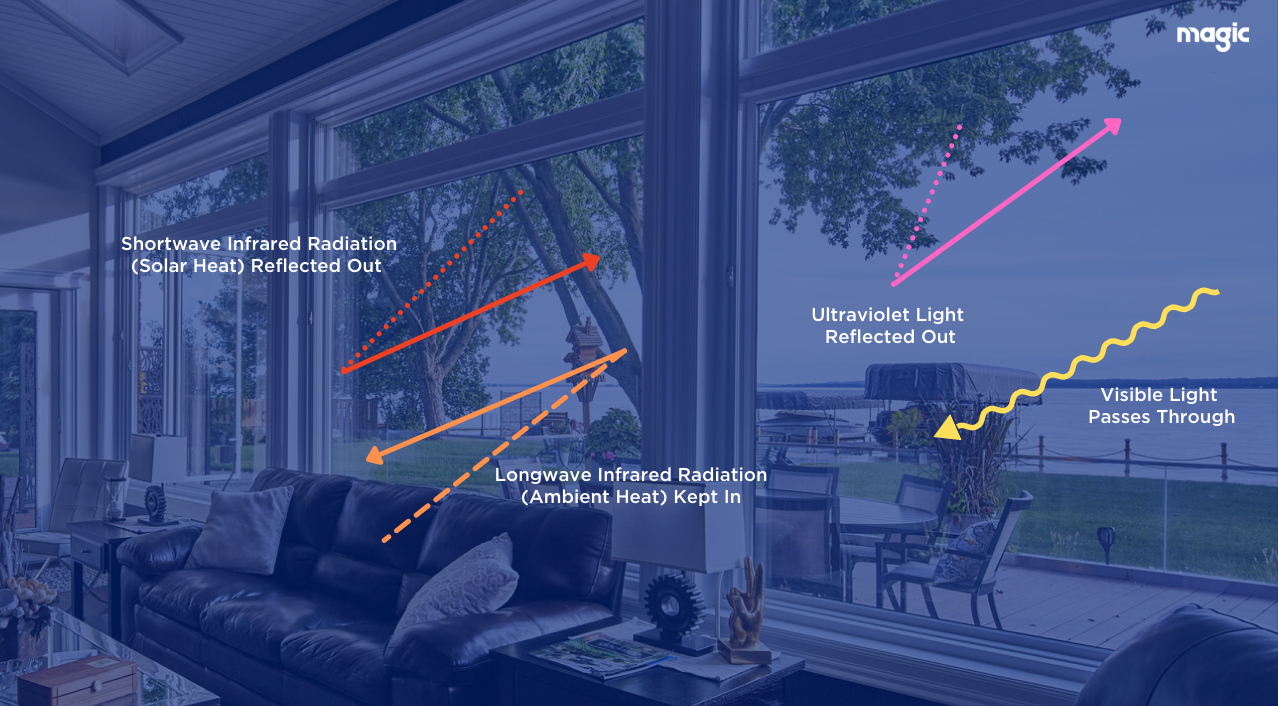
Low-E glass reduces the amount of ultraviolet light and infrared light that passes through a window. At the same time, it does not reduce visible light transmittance because Low-E coatings are virtually invisible to the naked eye.
Ultraviolet (UV) Radiation
- What it is: ultraviolet light is invisible radiation with wavelengths shorter than visible light (310-389 nanometers).
- Why it matters: UV radiation streams through untreated windows and causes furniture, wall coverings, artwork, and carpeting to fade and discolor over time, which is a major concern for homeowners.
- How Low-E handles it: all Low-E coatings reflect and limit the amount of UV light entering the home, protecting your interior furnishings regardless of climate type.
Visible Light
- What it is: visible light is the portion of the solar spectrum the human eye can see, roughly 380-780 nanometers in wavelength. It’s what we perceive as natural daylight.
- Why it matters: visible light is essential for bright, comfortable interiors and helps reduce reliance on artificial lighting.
- How Low‑E handles it: modern Low‑E coatings are designed to transmit a high percentage of visible light while selectively reflecting UV and infrared. This keeps rooms bright and comfortable without the excessive heat gain and UV damage associated with untreated glass.
Short‑Wave Infrared Radiation (Solar Heat)
- What it is: the shorter‑wavelength portion of infrared light emitted by the sun that carries much of the solar heat that reaches your windows.
- Why it matters: when short‑wave IR passes through glass and is absorbed by interior surfaces, it heats the room and drives up cooling loads, especially in summer or in hot climates.
- How Low‑E handles it: solar‑control Low‑E coatings are tuned to reflect a significant share of short‑wave infrared back outdoors, limiting solar heat gain while still admitting useful visible light.
Long‑Wave Infrared Energy (Interior Heat Emission)
- What it is: the longer‑wavelength portion of infrared light re‑radiated by warm surfaces inside your home, such as walls, floors, furniture, and even the glass itself, after they absorb solar or indoor heat.
- Why it matters: in winter, untreated high‑emissivity glass readily emits this long‑wave IR to the outside, becoming a major pathway for heat loss and higher heating bills.
- How Low‑E handles it: passive Low‑E coatings lower the glass’s emissivity and reflect long‑wave infrared back into the room, helping retain interior heat and improving the overall insulating performance of the window.
Passive vs Solar Control Low-E Glass
Homes in different climates have different needs. Because of this, there are two types of Low-E coatings, and it's important to choose the correct ones, depending on the climate.
Before we discuss more details, here's a quick breakdown of the main differences between passive Low-E coatings and solar control Low-E coatings:
*SHGC = Solar Heat Gain Coefficient (explained below)
Passive Low-E Coatings (Cold Climate Formula)
Passive Low-E coatings are recommended for colder climates with long heating seasons. These coatings focus on keeping solar heat in rather than actively trying to reflect it out. They're designed to allow maximum solar gain during winter while minimizing heat loss.
Passive Low-E coatings are placed on surface 3 and/or 4 of an Insulated Glass Unit. This way, they help homes take full advantage of free solar heat gain, reducing the burden of heating systems.
Solar Control Low-E Coatings (Hot Climate Formula)
Solar Control Low-E coatings are used in very warm, sunny climates with long cooling seasons. Solar control Low-E coatings actively resist and reflect solar heat back to the outside before it enters the home.
Solar control coatings are typically placed on surface 2, which intercepts solar radiation early and reflects it outward, reducing cooling costs.
Double-Glazed Window Construction
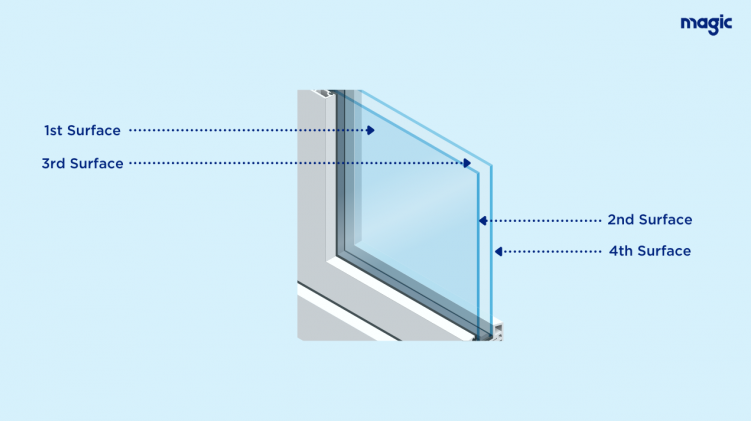
A double-glazed window consists of:
- Two panes of glass separated by insulated spacers
- An insulating air space or a space filled with insulating gas, usually argon or krypton gas
Four coating surfaces where Low-E coatings can be applied:
- Surface 1: The outside-facing surface of the exterior pane (exposed to weather)
- Surface 2: The inside-facing surface of the exterior pane (faces the airspace)
- Surface 3: The outside-facing surface of the interior pane (faces the airspace)
- Surface 4: The inside-facing surface of the interior pane (faces your home's interior)
Window manufacturers choose which surfaces to coat based on the desired Low-E performance. Cold climate formulas place coatings on surfaces 3 and 4 to reflect interior heat back in. Hot climate formulas place coatings on surface 2 to intercept and reflect solar heat early.
How Do Low-E Coatings Affect Window Energy Efficiency?
Low-E coatings have a significant, measurable impact on window energy performance. To understand this impact, you need to know how window efficiency is measured by industry standards.
Window Energy Efficiency Metrics
The four key energy efficiency metrics you need to know, mentioned on the NFRC label, are:
- U-Factor
- Solar Heat Gain Coefficient (SHGC)
- Visible Transmittance (VT)
- Air Leakage (AL)
Here is a comparison between these four key energy efficiency metrics:
Does Low-E Glass Improve U-Factor?
Yes, Low-E glass improves U-factor. Without Low-E Coatings, standard double-glazed windows typically have a U-factor of 0.50-0.70. With Low-E Coatings, standard double-glazed windows have a U-factor of 0.25-0.35 or even lower. A window with a U-Factor of 0.25 loses heat at half the rate of a window with a U-Factor of 0.50.
Does Low-E Glass Improve Solar Heat Gain Coefficient?
Low-E glass does improve Solar Heat Gain Coefficient. Untreated glass has a Solar Heat Gain Coefficient of approximately 0.80, which means it allows 80% of solar heat into the house.
Now, the SHGC you want depends on the climate in your region. If you live in Northern Canada, you want windows that maximize solar heat gain (SHGC of 0.60), so you can benefit from the solar heat during cold winter days. If you live in a warmer climate, you want windows with a lower Solar Heat Gain Coefficient (0.20-0.40) to block heat during the summer.
Does Low-E Glass Affect Visible Transmittance?
Low-E glass options typically have minimal impact on Visible Transmittance. Low-E coatings are virtually invisible to the naked eye, so they do not significantly tint the window. Moreover, they are designed not to block visible light transmittance, so the Visible Transmittance of Low-E glass is nearly identical to the Visible Transmittance of untreated glass.
How Is Low-E Glass Made?
There are two main manufacturing methods for applying Low-E coatings to the glass surface: pyrolytic (hard coat) and MSVD (soft coat).
Pyrolytic (Hard Coat) Low E
During the pyrolytic process, the Low-E coating is applied while the glass ribbon is being manufactured on the float line at high temperatures. The coating material fuses directly into the hot glass surface, creating an exceptionally strong bond. Then, the glass surface is cut and installed in the window unit.
Pyrolytic Low-E coatings have higher emissivity and lower solar control performance. They're also called passive Low-E Coatings.
MSVD (Soft Coat) Low E
Magnetron Sputter Vacuum Deposition (MSVD) applies coatings to pre-cut glass in a vacuum chamber after the glass has cooled. MSVD Low-E coatings have superior thermal performance and lower emissivity. They are also called Solar Control Low-E coatings.
Benefits of Low-E Glass
Low-E glass delivers both comfort and financial benefits that often pay for themselves over the window’s service life. Here’s what you can expect.
Energy Savings
Low-E windows can cut heating and cooling energy consumption by up to 30% compared to older clear double-pane units, depending on your climate and house condition.
The impact is especially noticeable in:
- Older homes with single-pane or basic double-pane windows
- Homes with large window areas or highly glazed rooms
- Climates with significant temperature swings between seasons
Improved Comfort
Beyond energy saving benefits, Low-E glass makes your home more comfortable:
- Warmer interior glass temperatures in winter reduce that cold, drafty feeling near windows
- Reduced cold spots and downdrafts make sitting near windows pleasant year-round
- Less overheating and hot spots in summer, especially those areas hit by direct sunlight
- More consistent interior temperatures throughout the day
UV Protection
Low-E coatings block significant UV radiation. This protection helps prevent:
- Fading of carpets, rugs, and flooring
- Damage to upholstery and curtains
- Deterioration of wood finishes
- Fading of artwork and photographs
Reduced Condensation
Warmer interior glass surfaces dramatically reduce condensation on the interior pane during cold weather. This means:
- Less moisture running down windows onto sills
- Reduced risk of mold and mildew growth
- Less damage to window frames and surrounding finishes
Noise and Security
While Low-E itself doesn’t make glass soundproof, it’s typically paired with double or triple glazing and sometimes laminated panes. These combinations improve sound damping and security compared to single-pane windows.
Environmental Impact
Lower energy consumption means reduced greenhouse gas emissions and a smaller carbon footprint for your home. This helps meet increasingly stringent climate and building performance targets in many regions.
What Are the Disadvantages of Low-E Glass?
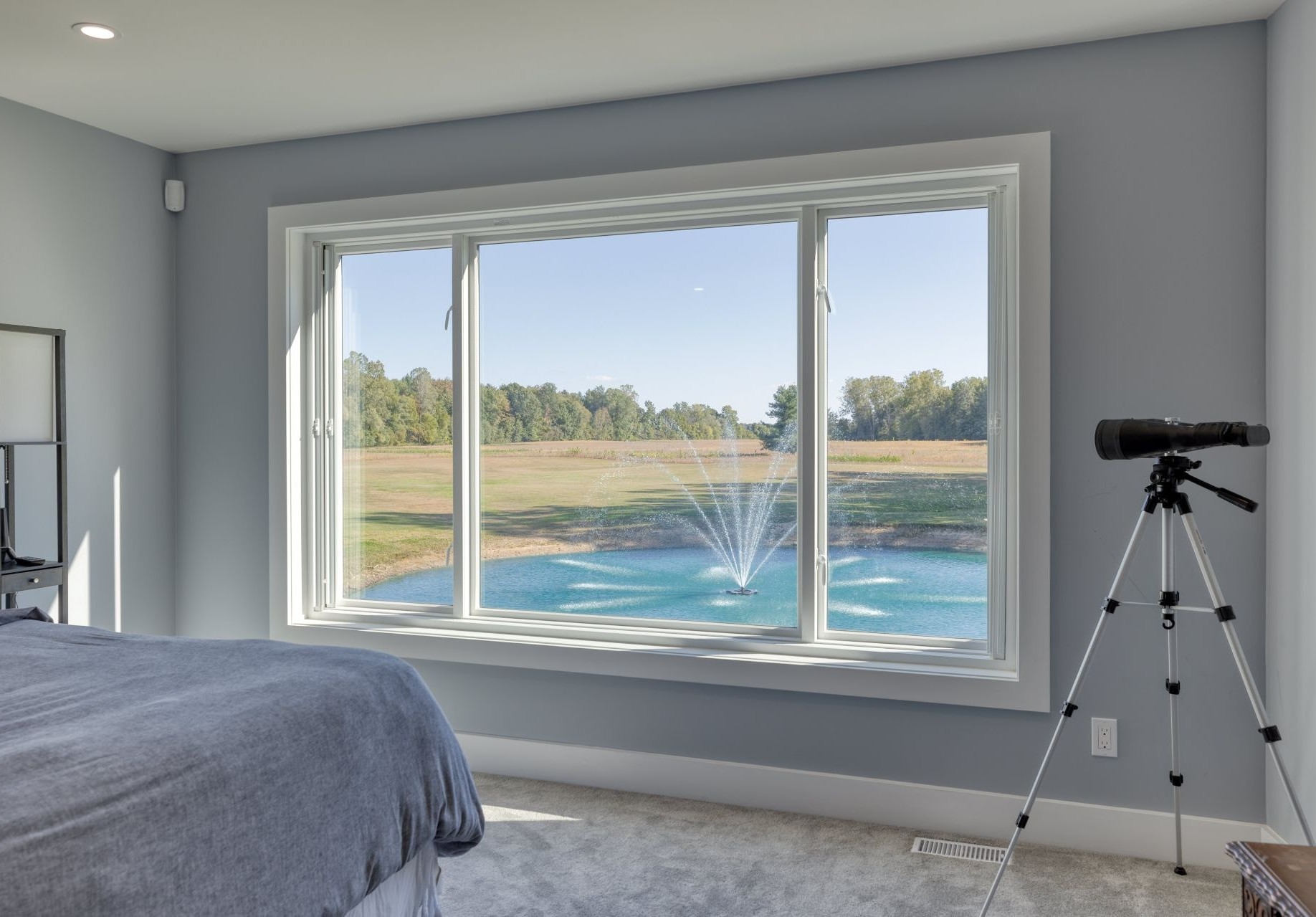
Here are some disadvantages of Low-E glass windows that are worth considering.
- Higher cost. Low-E glass costs more than clear glass due to specialized coating processes and quality control requirements.
- Slight tint and increased reflectivity at certain angles.
- Solar Heat Gain Coefficient issues if Low-E coatings are not chosen and installed correctly
How Much Do Low-E Windows Cost? Will They Pay for Themselves?
Low-E windows cost more than standard clear glass, depending on size and configuration, but they typically pay for themselves, as they can reduce heating and cooling costs by 20-30%, as long as they're chosen correctly, depending on climate. This can also prolong the lifespan of the home's HVAC system by 5-10 years.
Moreover, homeowners in Canada can benefit from government rebates for energy-efficient upgrades, which can offset the upfront cost.
Regional Low-E Glass Recommendations for Canada
Canada's climate varies dramatically from coast to coast. The right Low-E coating choice depends on your specific region and heating/cooling needs. Here are some guidelines based on different regions in Canada.
Atlantic Canada
- Climate: mildly cold winters (-0°C to -15°C), cool summers (18°C to 25°C)
- Energy dominance: Heating (65% of energy use)
- Recommended Low-E type: Passive Low-E (high SHGC: 0.60)
Quebec
- Climate: Cold winters (-15°C to -30°C in northern regions), warm summers (20-28°C)
- Energy dominance: Heating (70% of energy use in Montreal; 85%+ in Quebec City and north)
- Recommended Low-E type: balanced Low-E formula (high SHGC: 0.40-0.55), balanced toward winter heat gain.
Ontario
- Climate: Cold winters (-10°C to -30°C), warm summers (20-28°C), moderate seasonal variation in the south; more extreme in the north
- Energy dominance: Heating (65-75% of energy use)
- Recommended Low-E type: Balanced Low-E formula (SHGC: 0.40-0.50) for Southern Ontario; passive Low-E (SHGC: 0.45-0.60) for Northern Ontario
Prairie Provinces
- Climate: Extremely cold winters (-20°C to -45°C), warm summers (15-25°C)
- Energy dominance: Heating (80%+ of energy use)
- Recommended Low-E type: Passive Low-E (very high SHGC: 0.45-0.60)
Northern Canada
- Climate: Extreme cold (-30°C to -50°C in winter), very long winters (8+ months)
- Energy dominance: Heating (90%+ of energy use)
- Recommended Low-E type: Passive Low-E with maximum solar heat retention (SHGC: 0.50-0.60)
British Columbia (West Coast)
- Climate: Mild winters (-5°C to +5°C on coast, colder inland), cool/warm summers (18-25°C)
- Energy dominance: Heating (55-65% of energy use in Vancouver/Victoria; more in interior regions)
- Recommended Low-E type: Balanced Low-E (SHGC: 0.50-0.60) or solar control with good insulation (SHGC: 0.40-0.50)
How Long Do Low-E Coatings Last? Durability in Canada
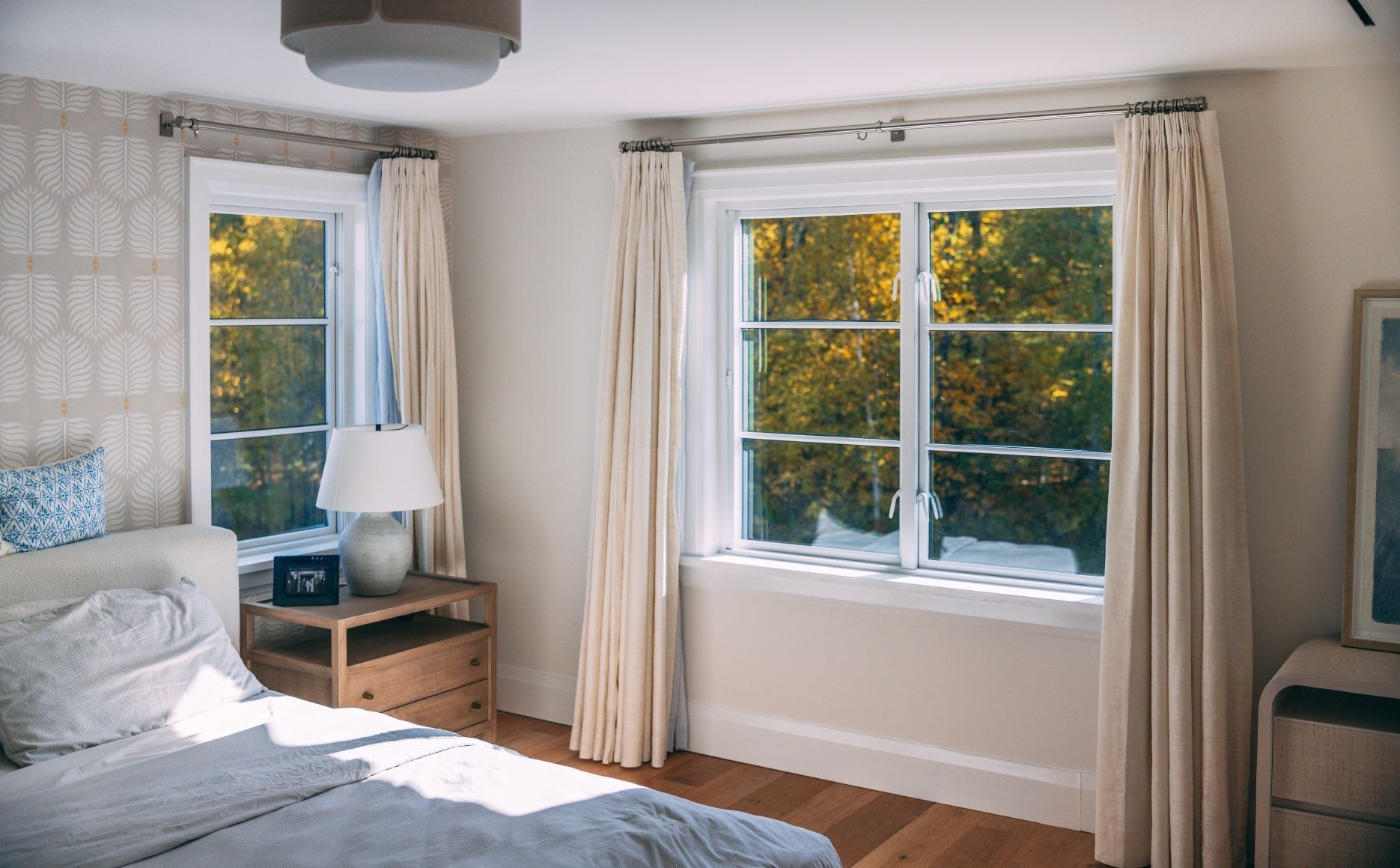
Low-E coatings typically last as long as the window unit itself. Since the Low-E coating is not installed on the exterior glass surface, it is not exposed to weather or physical wear, so it should last 20-30+ years.
However, for the Low-E coating and the window unit itself to last longer, it's important to choose high-quality materials, opt for professional installation, and maintain the window properly over the years.
Want the Most Energy-Efficient Windows? Contact Magic!
Magic windows are engineered with energy performance in mind and are perfectly suited to the climate conditions of the Greater Toronto Area.
Each window consists of a double-pane insulated glass unit and a one-inch warm-edge spacer. This spacer is designed to expand and contract at the same rate as the glass itself, helping maintain a durable, airtight seal. Because of this design, the insulated unit can hold a higher volume of argon gas than standard window systems, resulting in improved thermal performance. Magic windows can also be upgraded with Low-E glass coatings and integrated Thermal Blinds.
Magic windows have the following energy ratings:
- U-factor: 0.26-0.30; with our retractable screens and blinds: 0.17-0.30
- SHGC: 0.17-0.48
- VT: 0.36-0.53
Curious to learn more about energy-efficient replacement windows? Book a free consultation with Magic! We manufacture our units right here in Ontario, so we can tailor your Low-E glass windows based on your home's needs, your windows' orientation, and your home's location!
FAQs
What is Low-E argon glass?
Low-E argon glass is an insulated glazing unit that combines a low-emissivity coating with argon gas sealed between two or three panes of glass. The coating lets less radiant energy in, while the argon gas improves insulation by slowing heat loss.
What does Low-E mean for glass?
Low-E stands for “low emissivity,” meaning the glass reflects heat instead of allowing it to pass through. This helps keep heat inside during winter and reduces heat gain during summer.
What is the downside of Low-E glass?
Some downsides of Low-E glass include: it costs more than standard clear glass, slightly reduces visible light transmission, and if poorly specified for the climate, it can also limit beneficial solar heat gain.
Is Low-E glass better than clear glass?
Yes, Low-E glass is significantly more energy-efficient than clear glass because it reduces heat transfer. This results in lower heating and cooling costs and improved indoor comfort.
Is Low-E glass as good as double glazing?
Low-E glass and double glazing are not direct substitutes because they serve different roles. Low-E is a coating, while double glazing refers to multiple panes; the best performance comes from using Low-E coatings within double- or triple-glazed units.